On this page
The eleven trades
| Career cluster | Trade | Name in Amharic |
|---|---|---|
| Manufacturing | Metalwork Technology | ብረታ ብረት ሥራ ቴክኖሎጂ |
| Manufacturing | Automotive Technology | አውቶሞቲቭ ቴክኖሎጂ |
| Manufacturing | Garment Technology | አልባሳት ቴክኖሎጂ |
| Building Construction | Building Electrical Installation | ህንፃ ኤሌክትሪክ መስመር ዝርጋታ |
| Building Construction | Plumbing Installation | ቧንቧ ሥራ |
| Information Technology | Software Development | ሶፍትዌር ማበልጸግ |
| Agriculture Science | Crop Production | ሰብል አመራረት |
| Health Science | Health Caregiving | ጤና ክብካቤ አገልግሎት |
| Business Science | Hotel Operation Services | ሆቴል አገልግሎት |
| Business Science | Hair Dressing and Beautification | ፀጉር ሥራና ውበት አገልግሎት |
| Business Science | Food Preparation | ምግብ ዝግጅት |
The English names in the middle column are the bureau's own, copied from the manual rather than translated here. A school writing one of these onto a timetable, a report card or a bureau return should use exactly that wording, because it is the wording the bureau will read the return against.
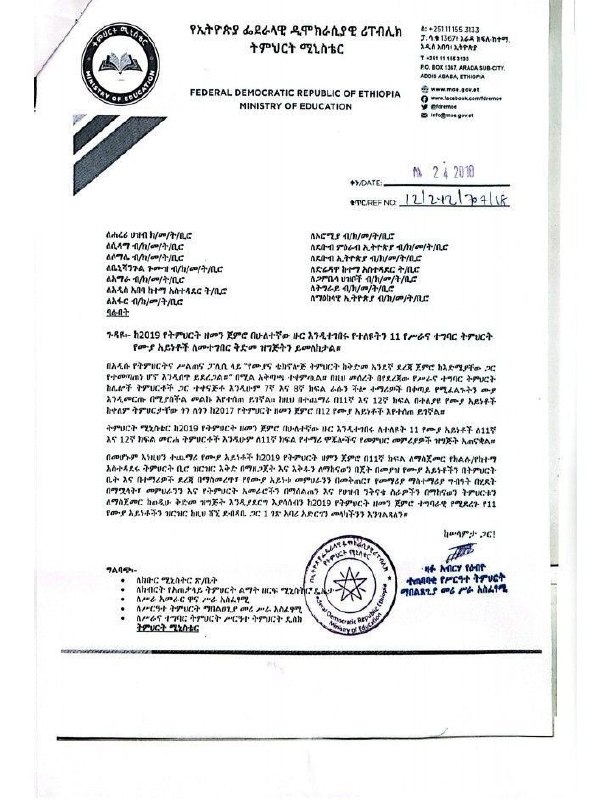
What bureaus were asked to do
- 1
Plan and budget
Each regional and city education bureau prepares a detailed plan and holds budget against it, then has schools and students select which trades they will take.
- 2
Hire the teachers
A trade needs a teacher qualified in that trade. This is the line most likely to decide which schools actually open a subject in September and which quietly do not.
- 3
Equip the workshops
Teaching and learning materials to be supplied progressively, which is the circular's own wording and an acknowledgement that they will not all arrive at once.
- 4
Train staff and tell the public
Teachers and school leaders to be trained, with public mobilisation work alongside it so families know what their children are choosing between.
How a school and a student choose
This is the part the Addis Ababa manual adds. Opening a trade is a school decision made against what the school can actually deliver, and the manual sets out how it is taken and who signs it off.
- 1
The school looks at what it can deliver
Before choosing, a school weighs the work available around it, whether the teaching materials for the trade exist, and whether there are graduates of that trade who could teach it. The manual is explicit that capacity differs from school to school.
- 2
It consults outside its own walls
Schools decide in consultation with technical and vocational institutions and other stakeholders, so the trade a school opens matches something the neighbourhood can employ or train into.
- 3
School management approves, then it goes up the chain
The chosen trades are put to school management for approval, and the school reports what it selected to the sub-city education office, which reports to the city bureau, which reports to the Ministry.
- 4
Students rank three, and take one
The student form collects a first, second and third choice. A student ends up studying one trade, and the manual says the choice should follow the student's own interest and ability.
Where this fits
The Education and Training Policy sets the direction that vocational and technology education should be taught from pre-primary onwards, at a level suited to the child's age. In practice that means work-and-practice education is integrated with other subjects at most levels, and stands on its own in Grades 7 and 8 so that students can begin choosing a trade to carry forward.
In Grades 11 and 12 the trades sit alongside academic subjects rather than replacing them. Twelve have been running since 2017 E.C.; these eleven make the second round.
What it means for a school opening in September
A new subject is never only a new subject. Each trade a school opens has to exist as a real subject on the Grade 11 timetable, with a teacher assigned to it, an assessment plan from the start of the term rather than retrofitted at the end, and a place on the report card that a parent and a bureau can both read.
Where a trade needs a workshop rather than a classroom, the timetable has to know that too, or two classes will be booked into the same room on the same morning. Schools running Temari can add these as school subjects and place them in the timetable and grade book before the year opens rather than after it.
Sources
Every figure and date above comes from one of these. Open them; a story about your child's school is worth checking.